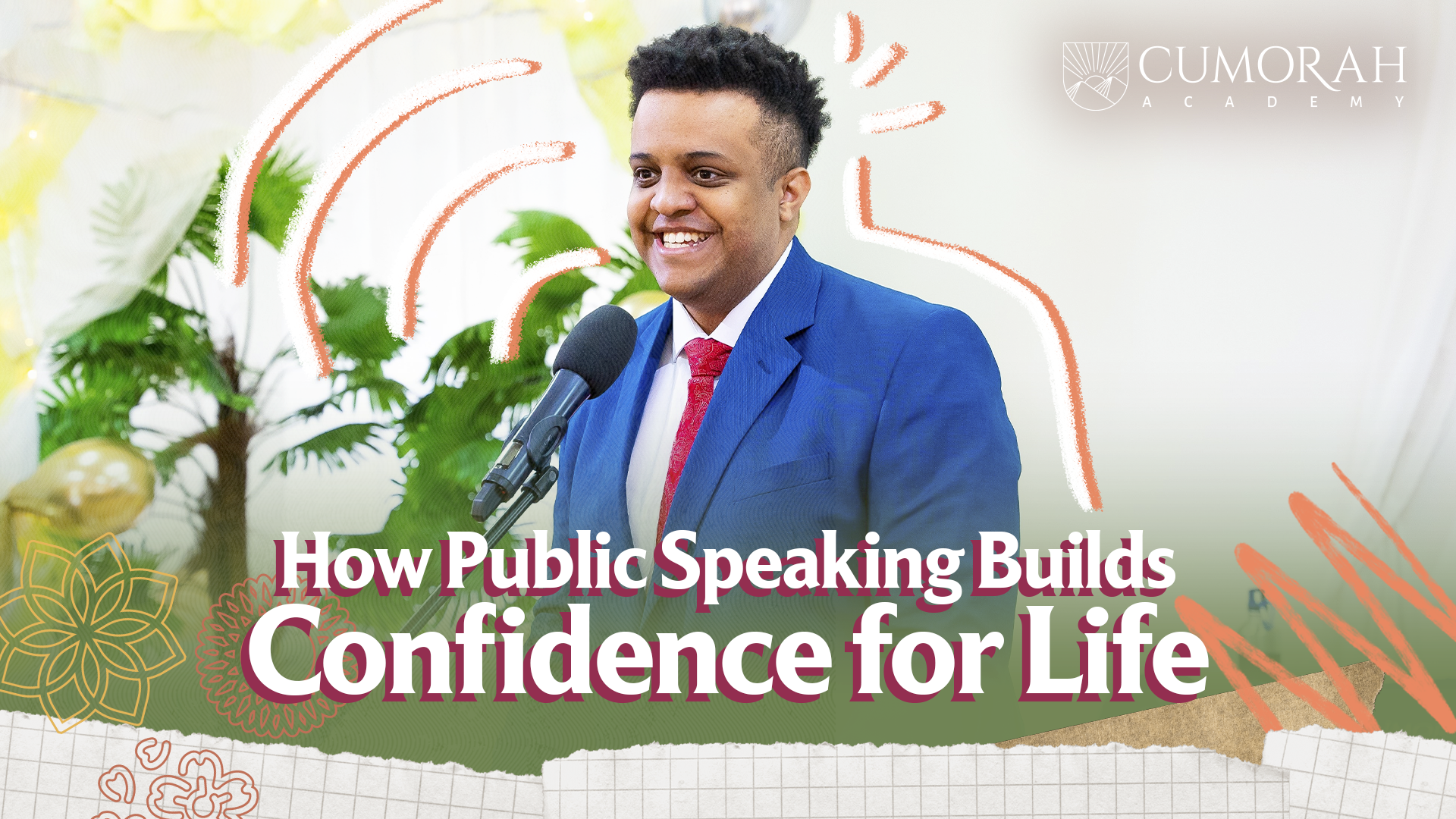
“Courage is not the absence of fear, but the mastery of it.” — Mark Twain
It is almost certain that you’ve felt it: the tight chest, the racing pulse, the sudden dry mouth the moment you’re asked to stand up and speak in front of a group. Public speaking consistently ranks among people’s greatest fears—for some, even ahead of the fear of death itself.
But here’s what most people never discover: the very thing that terrifies you is also one of the fastest paths to building lifelong confidence. Learning to speak in front of others doesn’t just change how you present—it changes how you carry yourself, how you handle pressure, and how you see your own potential.
For young adults preparing for careers, leadership, and life beyond the classroom, this skill can be transformative.

Why Public Speaking Terrifies Us
Before you can build confidence through speaking, it helps to understand why it feels so threatening in the first place.
Psychologists who study social anxiety explain that public speaking triggers the same fight-or-flight response as physical danger. Your brain interprets a room full of watching eyes as a potential threat, even though no real harm is coming. This is why your hands shake, your voice wavers, and your thoughts seem to vanish the moment you open your mouth.
- A fear-driven mindset says: “Everyone is judging me.”
- Or: “I’ll forget everything and embarrass myself.”
- Or: “I’m just not a natural speaker.”
These thoughts feel real in the moment, but they are not facts—they are predictions your brain makes under stress. And predictions, unlike facts, can be retrained.
This is exactly why public speaking is so valuable as a confidence-building tool. According to Toastmasters International’s research on communication and leadership development, people who regularly practice public speaking report significant gains in self-esteem, workplace credibility, and career advancement.
You Are Not Born a Confident Speaker
A common myth is that great speakers are simply born that way—naturally charismatic, naturally calm, naturally gifted with words. The truth is that confidence on stage is built the same way confidence is built anywhere: through repeated exposure and small wins.
As leadership researchers often note, confidence doesn’t precede competence—it follows it. You don’t wait to feel confident before you speak; you become confident because you spoke, even imperfectly.
For example, a first-time speaker might think: “I froze up last time, so I’m not cut out for this.” A growth-oriented speaker instead thinks: “I froze last time, so this time I’ll prepare a stronger opening.”
The difference isn’t talent. It’s the willingness to try again.
What Happens When You Avoid It?
If you spend your life avoiding public speaking, you don’t just avoid the podium—you avoid opportunities. You avoid raising your hand in meetings. You avoid pitching your ideas. You avoid the promotion that requires presenting to leadership.
Each time you shrink from the opportunity to speak, you reinforce the belief that your voice doesn’t matter as much as it does. Over time, this quiet avoidance can cost you influence, visibility, and the chance to lead.
Leadership, at its core, requires communication. Without the willingness to speak up, even brilliant ideas can go unheard.
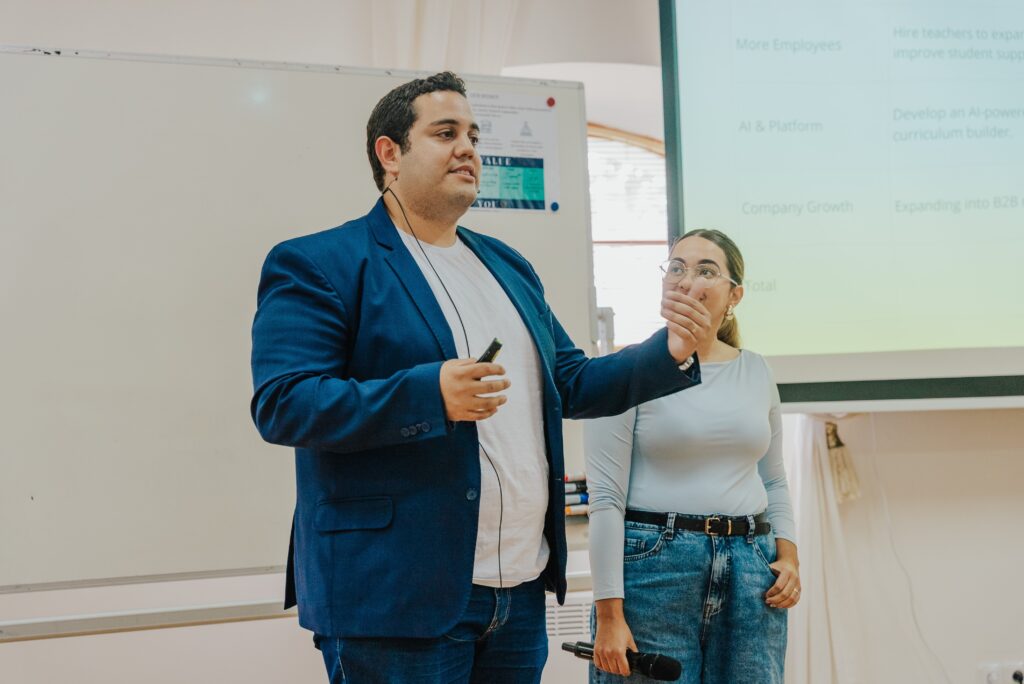
How to Build Confidence Through Public Speaking
The encouraging truth is that speaking confidence is a skill, not a personality trait. Here are proven ways to develop it:
1. Start Small and Speak Often
You don’t need a stage to start. Volunteer to summarize a discussion, lead a small group, or answer a question out loud instead of staying silent.
Action step: This week, speak up once in a setting where you’d normally stay quiet—a class, a meeting, or a group conversation. Notice that the world doesn’t end.
2. Prepare, But Don’t Memorize
Over-memorizing your words can actually increase anxiety, because one forgotten line can derail your entire flow. Instead, know your key points cold, and let the exact wording flow naturally.
Action step: Before your next talk, write down only three main points on a card. Practice explaining each one in your own words, out loud, three times.
3. Reframe Nervousness as Energy
Physiologically, excitement and anxiety feel almost identical—a racing heart, quickened breath. Research on performance psychology shows that people who relabel nervousness as “excitement” perform better than those who try to “calm down.”
Action step: Right before you speak next, say to yourself, “I’m excited,” instead of “I’m nervous.” The feeling in your body doesn’t have to change—only the story you tell about it.
4. Seek Feedback, Not Perfection
Every great speaker has a long trail of awkward, imperfect talks behind them. What separates growth from stagnation is asking for honest feedback and applying it.
Action step: After your next presentation, ask one trusted person: “What’s one thing I could improve next time?” Then actually try it.

A Skill That Shapes Every Area of Life
The confidence built through public speaking rarely stays confined to the podium. Students who learn to speak up in front of a class often find it easier to negotiate a salary, defend an idea in a meeting, or comfort a friend with the right words at the right time.
Imagine yourself in an environment where mentors, peers, and leaders push you to find your voice—not to perform, but to grow. A community that values speaking up doesn’t just teach you to talk. It teaches you to lead.
Take the Next Step
Your voice matters more than you think—and the only way to discover its strength is to use it.
At Cumorah Academy, students build public speaking skills alongside leadership, business, and communication training, all within a supportive community that pushes you to grow beyond your comfort zone.
Ready to find your voice and build the confidence that comes with it? Apply to Cumorah Academy today and start building the future you were meant to create.
Because real confidence doesn’t come from talent—it comes from the courage to speak.