Key Takeaways
- Leadership succeeds or fails based on how clearly ideas are communicated.
- Intentional questions prevent confusion and strengthen trust.
- Communication is about meaning, emotion, and awareness.
- Great leaders adapt their communication to people, roles, and generations.
Leadership is often associated with vision, confidence, and influence, yet none of these qualities can exist without clear and intentional communication.
Every relationship, decision, and outcome in leadership is shaped by how messages are formed and received.
At Cumorah Academy, students are encouraged to slow down and examine communication not as a leadership discipline but as a practice and reflection.
This week, students explored these ideas through mentorship, discussion, and real-life application, guided by mentor Lisa Daems.
The experience challenged them to rethink how communication works beneath the surface and why clarity matters more than volume.

Why Strategic Communication Matters in Leadership
Leadership communication is not about speaking more often or more confidently.
It is about speaking with purpose and direction.
When leaders fail to communicate clearly, teams become misaligned, trust weakens, and progress slows down.
Students learned that leadership communication sets the emotional and cultural tone of any group.
It influences how people interpret goals, respond to challenges, and engage with one another. A message without intention can create confusion, even when the goal is positive.
Understanding communication as a leadership responsibility helps leaders move from reaction to reflection, ensuring that every message supports the outcome they want to achieve.

Strategic Communication in Daily Leadership Practice
Leadership communication shows up most clearly in everyday moments. Team meetings, feedback conversations, written messages, and even silence all send signals that shape behavior and expectations.
Students practiced pausing before communicating and asking themselves important questions.
What are we trying to achieve?
Are our actions aligned with the desired outcome?
Is any information unnecessary or distracting?
These questions help leaders communicate with clarity instead of assumptions. They reduce misunderstandings and allow teams to focus on what truly matters, especially in environments where pressure and emotions are high.
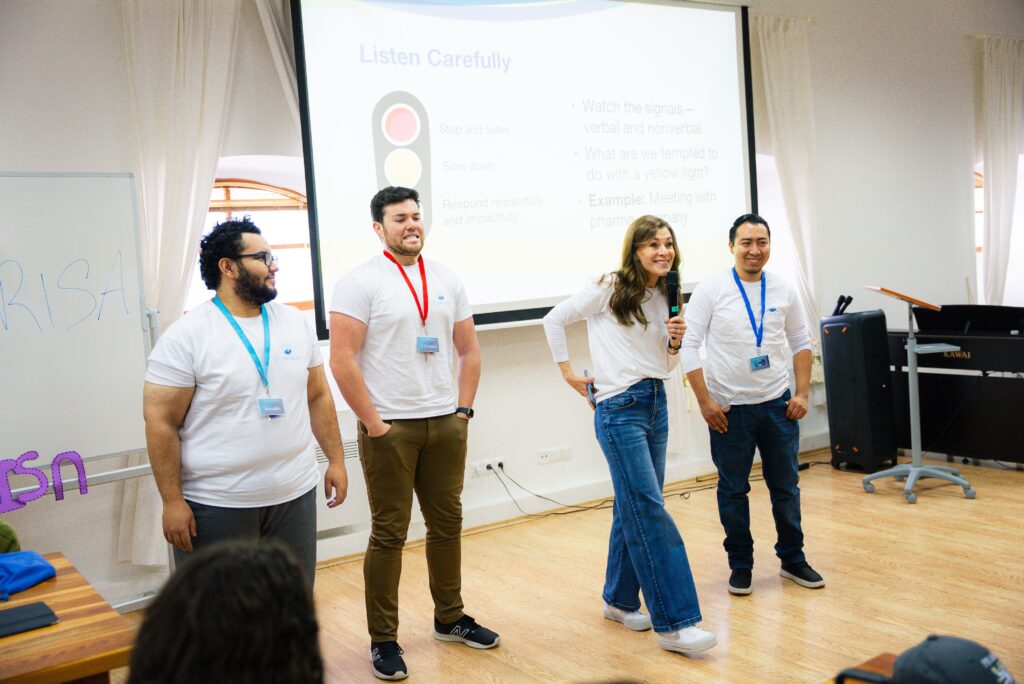
Learning Strategic Communication with Mentor Lisa Daems
Mentor Lisa Daems brought both structure and empathy into the classroom. Originally from Nazareth, Pennsylvania, she joined Cumorah Academy through Kelly Shepherd and quickly built trust with students through her openness and real-world experience.
Lisa leads an active and service-oriented life. She enjoys tennis, hiking through Pennsylvania’s wooded parks, watercolor painting, beginner yoga, and exploring new fitness activities. Together with her family, she regularly serves at food banks and participates in humanitarian work while traveling.
In her sessions, Lisa emphasized that trust is the foundation of leadership, reminding students that even the strongest vision cannot succeed without it. Her teaching helped students see communication not as control, but as connection.
Strategic Communication and the Power of Asking Questions
One of the strongest lessons students took away was the importance of asking thoughtful, inquisitive questions. Miscommunication often happens when leaders assume understanding instead of inviting clarity.
By asking the right questions, leaders open space for dialogue, alignment, and shared responsibility. This approach reduces defensiveness and increases engagement, allowing teams to feel heard while staying focused on outcomes.
Students learned that questions are not a sign of weakness in leadership, but a sign of awareness and confidence.

Strategic Communication Through Student Experiences
For many students, this topic reshaped how they view leadership and relationships. Christian Tripp, a student from the United States, reflected on how deeply communication affects everyday life.
“Quality communication is valued in all aspects of life. Without it, the best teams and relationships will fail. In order to establish valuable relationships with others and effectively work with them, we need to put conscious effort into good communication of our ideas and plans to others.”
Leonardo, a student from Brazil, was surprised by how quickly his perspective changed. “I had no idea how much I could grow in communication and speaking skills in such a short time,” he shared.
Later, he reflected on a deeper realization: communication is not just about words, but about understanding emotions, habits, fears, and intention. That awareness, he explained, changes everything.

Strategic Communication Across Roles and Generations
The sessions also explored how communication changes depending on context. Students examined communication bias, intergenerational differences, upward communication, and visual messaging. These discussions helped them understand how the same message can be received differently depending on experience, role, or background.
Effective leaders adapt their communication without losing authenticity. This flexibility allows them to lead across cultures, generations, and organizational structures with greater impact.
Strategic Communication as a Lifelong Leadership Skill
Communication is not a skill leaders master once and leave behind. It evolves through feedback, self-awareness, and intentional practice. Students were reminded that people already use their full capacity to communicate, but leadership requires using that capacity wisely.
Behind every word is meaning, context, and responsibility. Learning to communicate with clarity prepares students not only for professional leadership but for stronger relationships in every part of life.
Lead with Strategic Communication
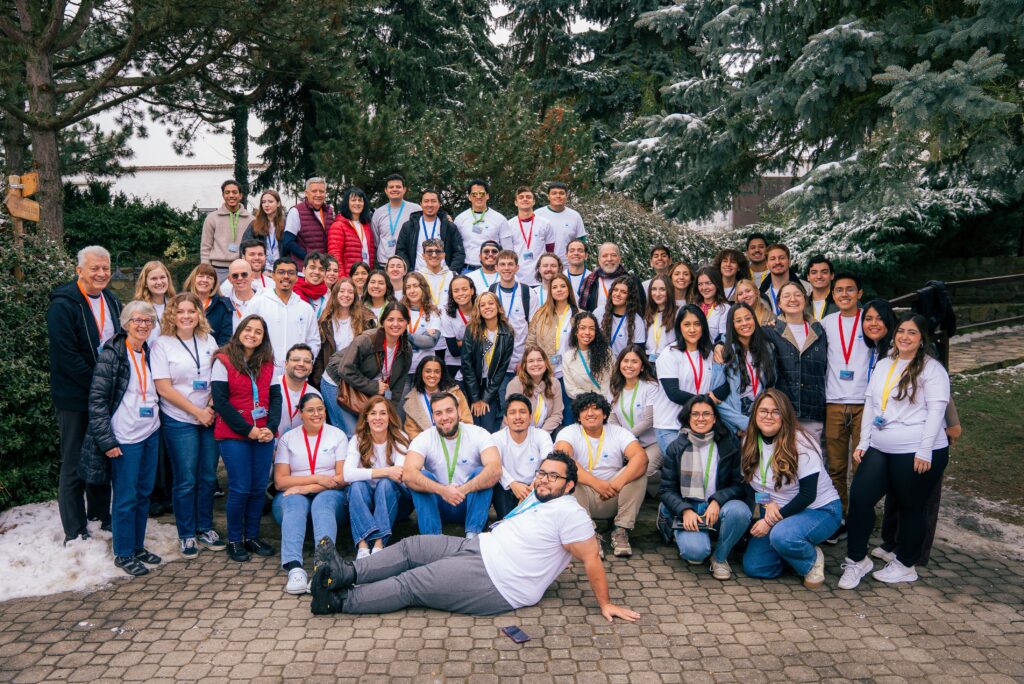
The lessons shared by Lisa Daems will continue to shape students long after the classroom. They leave with a deeper awareness of how words build trust, guide decisions, and influence people.
If you want to grow as a leader who communicates with clarity, empathy, and purpose, Cumorah Academy is where that journey begins.
Learn from experienced mentors.
Practice leadership in real situations.
Develop skills that will follow you for life.
Apply today and start leading with intention.
Written by Fernando L. Ferreira Jr.
Supervision by Kamila Uberto Fullmer